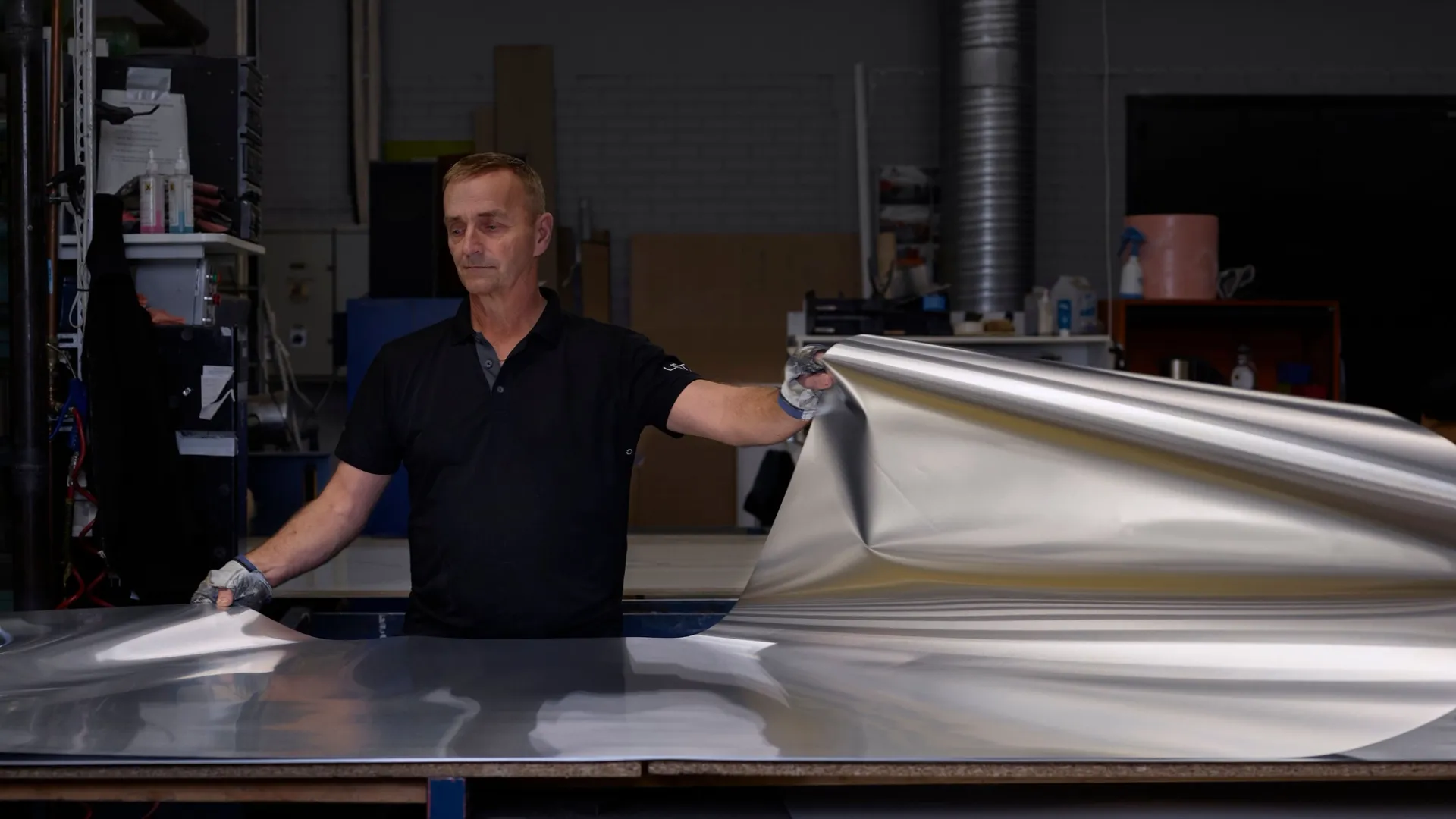
Quality is at the core of the brand, and it is born when carefully designed writing boards, office screens and noticeboards are built in the controlled setting of a modern factory. Lintex products do not turn up from anonymous manufacturers on the other side of the planet. They are created here, in the factory in Nybro in southern Sweden.
Lintex moved in 2009 into a disused factory that had previously made kitchen-cabinet fronts, built up its production and extended the premises. Room after room, materials are stored in racks and on shelves, with scanners keeping track of every detail. Everywhere you find solutions to problems. The writing boards are made by handcraft in combination with clever machines — the best form of low-tech, linked to computers. The company's self-developed apparatus is essential for rational production. A step that once took 45 minutes by hand now takes ten. The time saved is a necessity if production is to stay in Sweden.
Textile, oak and enamelled steel
Rolls of textile are stored in a room with numbered slots along the walls, so no one has to fetch fabric from a large pile with heavy lifting — ergonomics is decisive. The rolls are lifted from their slots with a purpose-built trolley, placed on the cutting table and cut by a pre-programmed machine. The cut fabrics move on to the upholsterers, where wooden frames — made by a local carpenter — are dressed. The skill shows in the rapid hand movements around the frame.

Large orange robots lift boards, sort them and set them down with jerky movements. The boards are cut with razor-sharp CNC programming. Ten boards already cut, ten more before the coffee break at two o'clock sharp. A seemingly indestructible machine glues the board elements together with enamelled steel. A carpenter works on frames in solid oak. Mitre joints are a delicate matter. They must meet with such precision that only the fingertips can feel the seam. It is here, in the small details in wood and metal, that Lintex's level of quality shows. No room for shortcuts.
The mitre joints must meet with such precision that only the fingertips can feel the seam.
The joinery · Nybro
Many hands
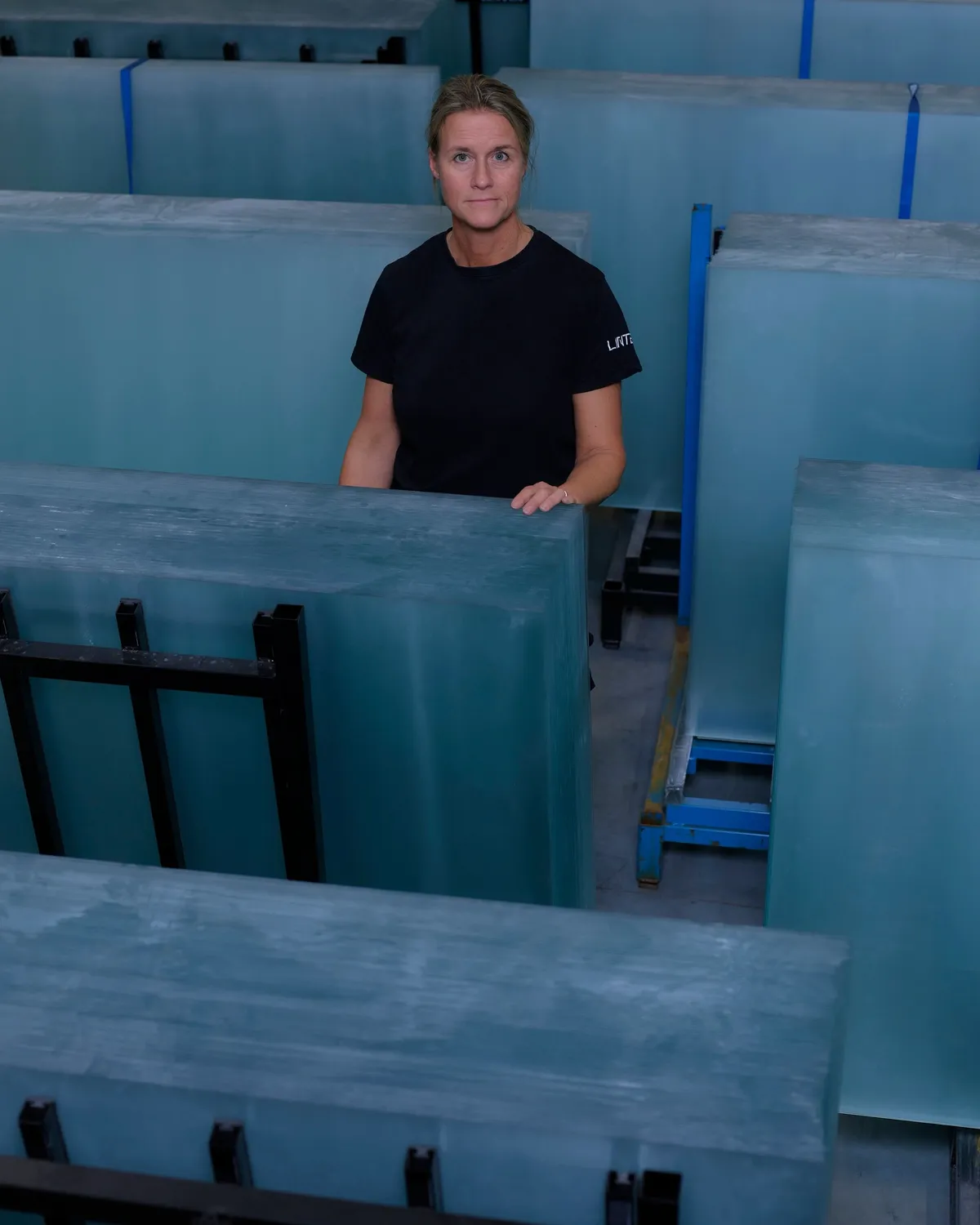
Step by step, raw materials and parts are joined into finished products. The processes show the utmost care for materials, environment and logistics. Everyone in the factory shares a particular spirit of care and pride. Some are new, others have worked here for decades. Many come from the woodworking industry or from the glassworks in the district. The mood is good, with plenty of banter and discussion. Respect for the craft is everywhere. Every part of a product passes through many hands, and at every stage there are quality controls to make sure no faults or sloppy fits slip through.
Beyond the loading bay
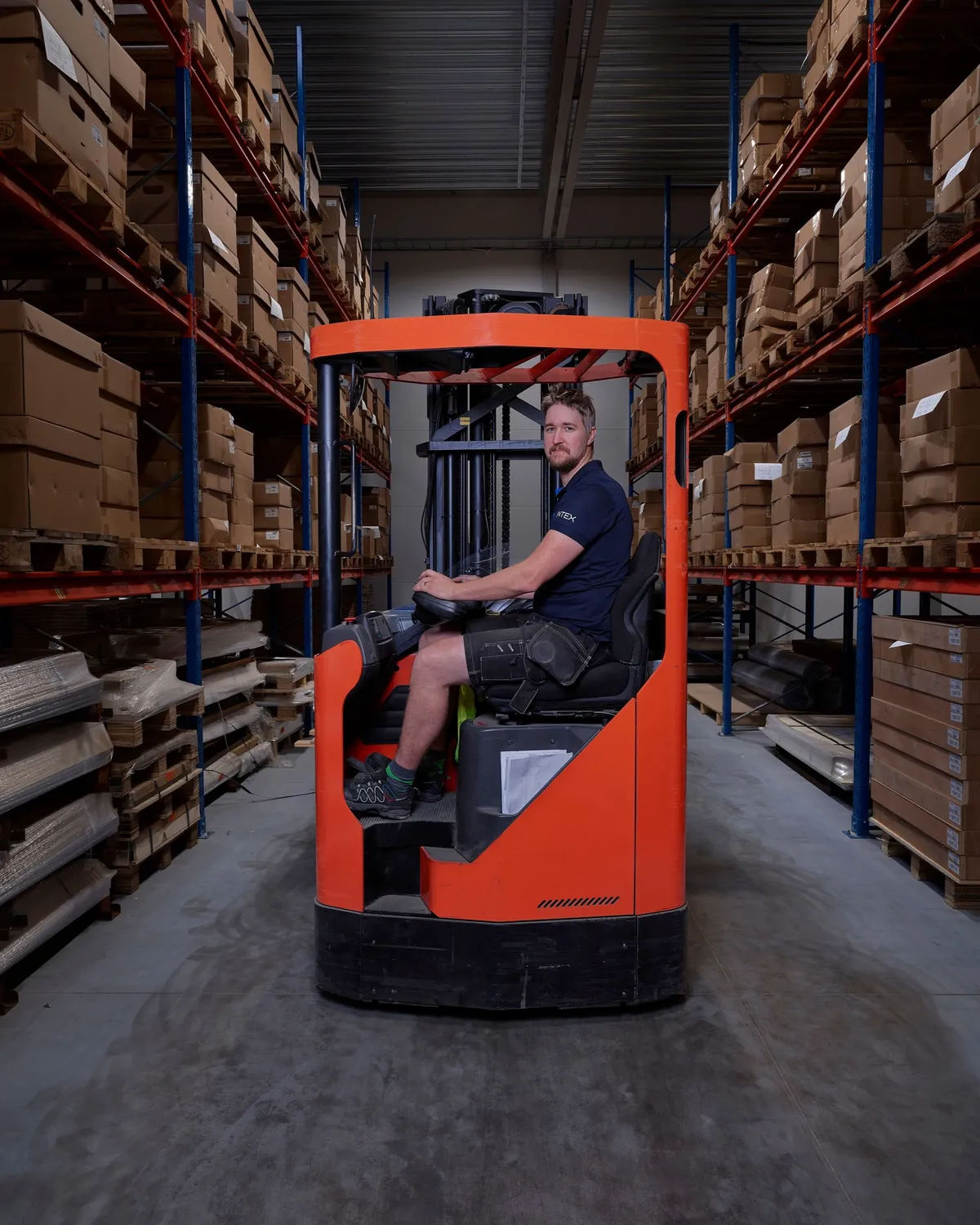
The work of the factory is run at detail level by a computer system that keeps track of everything: inflow, outflow, parts finished on a given morning, tempo, time, deliveries. Lintex takes pride in its rapid deliveries — often within two weeks of ordering, sometimes within two days for a standard product from stock. Lorries back into the factory, the products are loaded and the lorries roll towards Berlin, Basel, Lausanne, Italy, the UK, Finland. The whole world is waiting beyond the loading bays of the Nybro factory.


